In memory of
Arthur John Birch
AC CMG FRS FAA FRACI
3 August 1915 to
8 December 1995
a creative and talented Australian chemist
specialising in organic chemistry
and organometallic synthesis
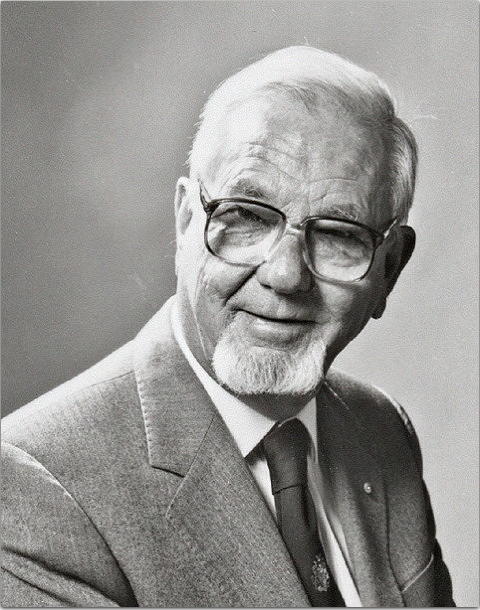
Arthur Birch AC CMG FRS FAA, was one of the finest Australian organic chemists of his generation. He was born in 1915 in Sydney, an only son, of modest origins. His mother, Lily Bailey from Oatlands in Tasmania, descended from convicts transported for petty theft to Tasmania in the early 1820's. His father, who came from a family of Northamptonshire church organists, worked in logging camps in the Yukon, Fiji and New Zealand, arriving in Sydney in the 1910s, where he become chief pastry chef at the Wentworth Hotel in Sydney.
Arthur's childhood homes were in Paddington and Bondi Junction. He went to Woollahra Primary, and then studied at Sydney Technical High School. By the age of about ten, he had already discovered a love for natural history, particularly geology and chemistry, progressing with such facility that in the early years he effectively taught himself. His leisure time included not only body-surfing at Bondi (he was always a strong swimmer), but, with schoolfriends, making crude explosives to gouge out fossils from quarries and cliffs around Sydney and the Royal National Park. Attracted by the idea of analysing the resins and smells of Australian native plants (including the Xanthorrhoea), at 12 years old, he made his first unique contribution to scientific research - a paper he wrote describing the steam distillation of lemon-smelling limonene from Araucaria Bidwilli.
After the age of 14, when his father had became too sick to work, Arthur had to balance his thirst for study with the rude reality of financial insecurity and caring for his mother.
A University Medallist in Organic Chemistry, he was one of the famous coterie of chemistry students from pre-war Sydney University, including his close life-long friends, who have now also passed, the Nobel prizewinner Sir John Cornforth, Rita Harradence (Rita Cornforth) and Ron Nyholm. Sir John Cornforth and Rod Rickards wrote a memoir about Arthur Birch (external reference below).
When he went to Oxford after the death of his father, at the age of 23, he took his mother with him to his "digs", and cared for her alone for the next ten years. He married his mum's District nurse, Jessie, in 1948.
It was in the years of WWII that Arthur made his most significant contribution to science. His organometallic ”Birch Reduction" has been, since then, one of the most used procedures in synthetic organic chemistry. Without it many of the steroid hormones going into such uses as the oral contraceptive, could not have been manufactured.
Using the Birch Reduction Arthur made the "first totally synthetic highly active androgen (indeed, the first synthetic structure-specific steroid hormone). This work was published before the natural hormone syntheses of Woodward and of Cornforth and Robinson." (Birch 1995, page 102). This achievement makes Arthur the "Grandfather of the Pill" or as he liked to say: "the Birch reduction became the Birth reduction". For more details read his Liversidge Research Lecture. A summary of his career achievements is linked below.
He returned to Australia in 1967 after many years in England to be first Dean of the then new Research School of Chemistry at the ANU in Canberra. He was actively involved in Australia and internationally in science policy, chairing the Independent Enquiry into the CSIRO in 1977, and being founding Chairman of AMSTAC (Marine Sciences and Technologies Advisory Committee). He had been President of both the Australian Academy of Science, and of the Royal Australian Chemical Institute.
An autobiography about his career: “To see the obvious” published by the American Chemical Society in 1995 as part of the Profiles, Pathways, and Dreams series. In all he wrote over 400 scientific papers (see Reference List of Publications below). A dedicated Australian, he had a distinguished career; and, as shown in his Curriculum Vitae, received numerous honours and medals in Australia and overseas. Amongst these were his Fellowship of the Royal Society, his honorary doctorates from Manchester, Sydney and Monash, and his Honorary Fellowship of the Royal Society of Chemistry. He was particularly proud of his appointments as one of only very few Honorary Fellows of the Royal Australian Chemical Institute.
This information was originally prepared in the period 1990 to 1993 to assist those reviewing his career achievements in later years. It provides insights into Professor Birch’s visions and achievements in broad promotions of novel organic and organometallic theories and methods, natural product research, synthesis and biosynthesis, including making possible the synthesis of steroid hormones including the first oral contraceptive pill. A downloadable copy is available.
Arthur John Birch's scientific contributions cover wide fields, some on the surface unrelated but all dependent on creatively promoting the broadest possible understanding of the potentialities of "natural products", novel synthetic approaches, biosyntheses of plant and mould products (now some 4000 in number), including a number of antibiotics like the tetracyclines.
He was the first to postulate the correct origins of the flower pigments and flower genetics, and the first to suggest, and prove, the diterpene pathways to the important plant hormone gibberellins. He suggested and fully investigated fundamental reaction mechanisms in chemical reduction and the reactions of mesomeric anions, making the first clear distinction between products of "kinetic" and "thermodynamic" control of reaction products, with many important general synthetic consequences. One in his hands was the first simple synthesis of the ring A-B structure of cholesterol.
His entirely novel findings and ideas were important in his own hands through practical results in specific areas. His first total synthesis of a male sex hormone (19-nortestosterone) , as the first member of a new structural series was a milestone. This highly biologically active sex-hormone lead directly through application of known structural principles by others to the oral contraceptives (19-nor-progestational analogues made by his unique process). Without the unique Birch Reduction the contraceptives could not have been made, at any rate until much later. Birch did not benefit financially in any way from the public freely available, release of his process.
He had acted as a stimulant of ideas for solutions of very general chemical problems, including founding a major branch of organometallic chemistry as novel synthetic organic chemistry with the first wide systematic examination of reaction controls of and by organic substituents, in ways which resemble the "reaction ideas" expressed by enzymes. As examples, he has directly synthesised both optical isomers of the biochemically very important aromatic precursor shikimic acid, with isotopic deuterium labelling in a manner hitherto only possible through enzymes, and the important enzyme-inhibitor gabaculine, in a few stages from benzoic acid. He provided clear published exemplifications of each of his approaches in key cases. He established new principles of organometallic "lateral control" including enantiospecific control in novel ways for organic synthesis, reminiscent of enzyme-capabilities. That he did not follow up all of them was his attitude to "breakthrough" novelty, combined with his continuing lack of material resources and generosity in resources to his independent colleagues.
His great influence on world organic and biochemistry has been to provide highly important entirely novel general methods, ideas, principles and practical approaches, for others to use. A number of disparate chemical-biochemical fields have acquired entirely new aspects as a result of Birch's work, including synthetic alicyclic chemistry; biosynthesis of plant and mould products, methods of organic structure-determination, basic theory in relation to electron-addition processes and the kinetic-thermodynamic reactions of anions, and the uses of transition metal complexes to control synthesis especially in novel ways resembling enzymes , forming directly and in high yields sterically totally defined products in mirror-image forms.
As Foundation Dean of the new Research School of Chemistry, in the then Institute of Advanced Studies, Australian National University, set up by him on entirely new lines and now World prestigious, and as a Government adviser, his personal researches suffered for many years from lack of time.
A question is why his contributions have not been more widely acknowledged. The answer is in part his modest methods of publication: he expected others both to "see the obvious" and to acknowledge its personal origins. In that he was largely disappointed. Many researchers "saw the obvious" as he set it out, but often by omission attributed novel visions to themselves. In part, some of his work was regarded by organic chemists as biochemistry, and vice versa (he published in chemical rather than biochemical journals). Although he had collaborators (much more limited in numbers than most people in his Professorial situation) the basic ideas and approaches set out here were all his. Principal practical collaborators were Herchel Smith, Rod W. Rickards and G. S. Subba Rao.
Birch’s career was characterised by novelty and achievement. The many novel contributions cannot even be summarised here as his major contributions are in very broad areas of organic chemistry, biological chemistry, synthesis, organometallic chemistry, reaction mechanisms. He probably did not sufficiently emphasise novelty at the times of publication, and many approaches are now part of the accepted "paradigm", of unrecognised origin.
Isolations of natural products is often a lottery, as to whether what is obtained is of structural or any other interest. It is indicative that Birch almost never undertook undirected isolation work. He chose structurally to examine those compounds isolated by others who had been defeated, or had not completed the structure, in order to illuminate new structure-methods (particularly but not solely applicable to natural products); structures of biosynthetic interest; structures of biological interest (such as antibiotics and the termite pheromone neocembrene) and structures which pose a particular forseeable theoretical or synthetic problem (e.g. Antimycin-A, pisatin, curvularin, or indeed the aromatic polyketides in general). He never followed the fashions of a time, for example for alkaloids or triterpenes. He did accidentally isolate some new structural series of interest, notably the brevianamides, the prototypes of a major series of mycotoxins, and he formulated some entirely new types of natural structure (among them the cyclopropanoid sesquiterpene aromadendrene, of general importance in the area, and Antimycin-A).
His new structure-determination methods included the first use with a natural product of unknown structure of mass-spectrometry and NMR as purely physical rather than chemical methods (1960) for geijerene, based on new interpretations of fissions such as the "reverse-Diels-Alder" process. Others later greatly developed this instrumental approach.
Above all he used novel biosynthetic ideas on possible nuclear origins based on his new theories, for many products from moulds in particular. This he later supplemented in a new way by experimental biosynthetic incorporation of isotopically labelled precursors, with final structures largely based on mutual locations of labelled atoms in the products, as well as on classical degradation procedures. This approach has since been developed, largely by others, with the new possibilities of NMR instrumentation into a simpler practical one. Nevertheless It, for example, first provided the basic structure of the important anti-fungal agent nystatin, not then obtainable otherwise, and the very highly rearranged nucleus of the diterpenoid antibiotic pleuromutilin. His new ideas of "mixed" biosynthesis: e.g. methyl and terpenoid cations "introduced" into polyketide and shikimic-acid nuclei, which he experimentally supported, were important in defining possible structures as well as in prediction of biosynthetic routes for biological experiment.
He used his own new reduction and base-catalysed reactions to supplement classical degradation procedures in simple and efficient ways with entirely new structure-reaction specificities (e.g. using metals in ammonia, potassamide in ammonia). This led, for example (simple base-catalysed degradations) to the simple definition of the broad natural "β-triketone" series structures, including the "male-fern" anthelminthics, and made a major contribution to the structure of a termite pheromone, the diterpene neocembrene. The reduction and allied approaches permitted Birch to define the relative and absolute configurations of many wood lignans, including, for the first time, the absolute configurations of the important tannins catechin and epicatechin, by reductively removing asymmetric centres specifically one at a time.
It is fair to say that nobody at that time looked at the skeleton of a new natural product in terms of its possible origin and biosynthetic interrelations in the way they would have done prior to his first publication in 1953 (or even before 1960, when it started generally to register with chemists), largely because of Birch's ideas and experimental confirmations.
Previously, there had been some developed ideas on alkaloids, and some developing ones on terpenoids, but the great mass of natural aromatic compounds, and many alicyclic one like antibiotics (e.g. tetracyclines) were a confused mass of formulae without any connecting thread. Among other problems, this inhibited structure-determinations, and efforts to affect biosynthetic pathways for a number of practical objectives (e.g. how do you increase the yield of an antibiotic, or alter its structure into a new desirable one?).How do structures of natural metabolites give information on evolutionary pathways?
His ideas and experimental work on novel biosynthetic pathways explained, for the first time the origins of, now many thousands of natural products, including many antibiotics (tetracyclines, griseofulvin, macrolides, etc.) the ergot alkaloids and many other classes. What had previously been a jumble of apparently unrelated formulae were reduced to order, permitting some practical control of production in microorganisms, such as the partial biosynthesis of new antibiotics using mutants and synthetic precursors , an approach which he postulated and pioneered. The work had broad biochemical implications, including the first suggestion and proof of "acetate" polyketide biosynthesis as a major method, and prediction and proof of the biochemically unknown biological C-methylation.
Among other applications, he explained for the first time the classical Haldane problem of flower-pigment genetics in Dahlia, and indeed was the first to suggest the origin of the skeleton and the intermediate stages to all of the anthocyanin flower pigments (later confirmed biochemically by others following that suggestion). He developed his increasing understanding in many ways, including a consideration of mutations in natural structural series to assist basic ideas of plant evolution.
He contributed greatly to terpenoid biosynthesis, including the first demonstration of biochemical non-randomisation of terminal Me in a terpene chain. By the use of this confirmed finding he supported the theoretical suggestion of others that diterpene biosynthesis involves "concerted" ring-closures, permitting this theory to be widely used. He developed the idea with some natural diterpenes, being the first to suggest that the C19-gibberellins (highly important plant hormones) are really (C20)-diterpenes, and confirmed experimentally his suggested overall stereospecific biosynthetic sequences for the rather complex generation of their skeleton. Subsequent work has merely confirmed his ideas in the terms of more detailed sequences. He correctly suggested other origins, such as of the dimethylbenzene ring in riboflavin (Vitamin-B1) (accompanied by synthetic support). His broad suggestions also correctly covered previously unknown biochemical processes, such as the N-oxidations of peptides, and some of their structural consequences for antibiotic generation.
Hydroaromatic chemistry has a very different aspect, following the "Birch" reduction method in 1944, one of the most highly used synthetic procedures, to produce correctly functionally substituted, partially reduced aromatic systems as synthetic precursors from available precursors. This in his hands, largely removed the need for catalytic hydogenations of aromatic rings, processes leading to fully hydrogenated, sterically unspecific products of limited synthetic use.
Although initially specifically devised to make biologically active analogues of steroid hormones like corticoids and structurally-realted sex homones (successfully, including the first synthetic structure-specific hormone--19-nortestosterone, an androgen--and in the hand of others with greater resources to the obvious progestational analogues later used as contraceptive Pills). It also turned out, as he predicted but did not extensively examine, to be the solution to a number of problems of stereospecific organic synthesis.
The Birch Reduction readily provides a very wide range of entirely new types of hitherto unobtainable unsaturated and specifically functionalised cyclic structures, with steric control, as precursors for general and natural product synthesis. Its most obvious triumph was the first total synthesis (1950) of a biologically active male sex-hormone and anabolic agent(19-nortestosterone), later making possible the oral contraceptives by others who added the known progestational two-carbon side-chain. This progestational possibility was forseen and published by him in 1950, in advance of work by others. His many other novel synthetic methods and approaches, provide a battery of structure-and stereo-specific methods to make natural product structures and many others. He arrived at generally useful concepts: the strategy now titled "convergent synthesis", and the critical distinction for synthetic achievement, between products of a reaction rate and an equilibrium position.
All of this work was accompanied by first elucidation of some basic theories, such as many reduction mechanisms and reactivities of mesomertic carbanions. The result of this work, stimulated by requirements of natural product synthesis, was a battery of new synthetic methods, including particularly a number of entirely novel ways to make quaternary carbon atoms, and to handle needs for otherwise unobtainable stereo-specific centres. These included the use of Diels-Alder reactions on "Birch-reduction" products of substituted methoxybenzenes, combined with a ring-fission reaction new in principle (e.g. see his synthesis of nootkatone and juvabione). He used Alder-Rickert reactions on the "Birch-reduction" products of substituted benzenes, leading for the first time to a simple and efficient way to make many important natural aromatics with his "polyketide" substitution, such as his total syntheses of substances like mycophenolic acid(now investigated as a major immunosuppressant).
Many of his novel ideas on processes arose from his preoccupation with the broadest possible theoretical and practical potentialities of his Birch-reduction products.
He combined his synthetic preoccupations, with ideas gleaned from his biochemistry, in new synthetic applications of organometallic chemistry, previously unrecognised in broad fashion by either organic or organometallic chemists.
Recognising its "coenzyme-like" character, he was the first to use the soluble Wilkinson hydrogenation catalyst with complex natural products, and with synthetically-valuable compounds containing reactive functional groups (nitro, halogen, quinones) which are structurally reduced by other "reducing" reagents. He demonstrated its total stereospecificity with ring-systems like steroids(e.g. by incorporation of deuterium).
His tricarbonyliron complex chemistry is the prototype for this approach to stoichiometric organic synthesis, including in particular important alicyclic natural products. His approach is by "lateral control" due to reversible attachment of a complexed metal atom. He has pointed out and exploited the resemblance to "enzymic-thinking" although the approach is not intended to imitate the exact methods of enzymes, despite the similar capability, which, in the laboratory extends beyond enzymic-conditions of experiment to many reagents and experimental conditions incompatible with any variant of natural enzymes. To achieve this he first made the most extensive systematic set of substituted organometallics in the literature. This is based on the cyclohexadiene ring and tricarbonyliron, with a wide variety of functional groups needed for further synthesis. He had to demonstrate: how to make such specific structures: positionally, stereospecifically and enantiospecifically; how to define the exact structures by chemical and physical methods; to define their reactions --of the nuclei as altered by the substitution including positional reaction rates, and of the functional groups as affected by complexation and other groups present. He had to devise some new organic synthetic reagent processes(e.g. nucleophiles) to be compatible with complexation. He had to devise optical resolution procedures. His ideas and methods and synthetic approaches are widely applicable in the organometallic field and are being followed up by others for specific syntheses.
The power of his concepts and methods was exemplified by short efficient syntheses, directly into optically resolved form, of the enzyme-inhibitor gabaculine and of specifically deuterium-labelled shikimic acid (a major biosynthetic intermediate), in ways previously only approachable enzymically.
Reference numbers shown refer to numbered papers in "List of Publications" PDF - available for download below.
i) Biochemical incorporations of labelled precursors for structure purposes (other than the many discussed elsewhere) :
165, echinulin was the first compound(notionally related to precursors of the brevianamide mycotoxin class and suggestive of it) which was structurally defined by the unprecedented method of incorporation of labelled precursors (tryptophan, terpene-precursors, an amino-acid). 189, pleuromutilin was the first diterpene, for which the much rearranged nucleus was defined both by biosynthetic ideas and by labelled acetate and mevalonate specific incorporations. 157,220,352,375, phomazarin, a novel polyketide azaanthraquinone, finally determined using biologically incorporated 13 C and 15N with NMR to define the overall skelton and its build-up (his last and most up-to-date effort in the area). 276,314, brevianamides -A,B,C,D by NMR, MS and incorporations of predicted precursors. The solution defined a new structural and biosynthetic class (partly based on oxidations of diketopiperazines) of which many later mycotoxins were later found , by other workers, to be members,. 217,218, nystatin was the first polyketide antibiotic (acetate, propionate) the major features of whose structure were correctly defined by incorporations of the variously labelled units, followed by specific degradations, enabling the junctions (on paper) of degradation products and the assignment of many substituents and of unsaturation positions. It was the first to be subject to this "incorporation-structure approach. 364, is one review covering this novel general approach, with other examples.
ii) Flavonoids: Anthocyanins
69, the overall structure, predicted on reaction mechanisms, of the "leucoanthocyanins" was confirmed by synthesis (they later proved, as Birch initially suspected in 1952, to be key intermediates in generation of flower colours, although this was obscured for a long time by erroneous biochemical work, not his). 95,113, the relative and absolute configurations of the important tannins, catechin and epicatechin, were defined by reduction methods, for the first time. 153, alphitonin, a new structural variation on the general flavonoid biosynthetic theme, determined by new anionoid fissions, not previously used fo degradations. 152, angophorols, a new series of C-methylated flavanones (later biochemically suggestive) (from a tree in his garden). 252,221, a unique type of the prototypic flavan, lacking an alicyclic hydroxyl, related to catechins. 75,219,279,331 new constituents, including bisflavans, of the extraordinary resin of Australian Xanthorrhoea species("Grass-trees").
iii) Lignans
6,64,127,204,205,260, structure determinations of many members of the series of tetrahydrofuranoid lignans, including gmelinol and its isomers first isolated by Birch. The general methods include the results of controllable metal-ammonia fissions at asymmetric ether centres, and also new applications of NMR and MS. 368, correlations of lignan structures, and new formulations of several.
iv) Terpenoids(new structures)
7, α-thujene (bicyclic monoterpene); 45, lanceol (sesquiterpene structure suggested by biogenesis and confirmed by metal-ammonia reduction); 58, macropone, biogenetic structure; 68, eudesmol, sesquiterpene stereochemistry by standard methods; 60, the sesquiterpene aromadendrene, the first of many natural structures to be defined to contain a cyclopropane ring, then a bold assumption; 61,70, ngaione and ipomeamarone, unusual toxic sesquiterpene ketones; 83, isoaromadendrene, a stereoisomer of aromadendrene; 87, mycelianamide, a partly terpenoid mould product of great biogenetic significance since reduction gave a pure monoterpene chain, which could be isotopically labelled for biochemical work; 88,183, zierone, a sesquiterpene with a novel azulenoid nucleus and some mechanistically, spectrally and biogenetically significant compressed structural features; 101, evodone, a new type of monoterpene furan; 109, spherophysine, a partly terpenoid alkaloid; 163, loganin, a very significant glycoside, structure partly defined; 164, geijerene, the first terpenoid (or any other natural product structure) defined only by MS and NMR (1960); 168, aucubin, a partly terpenoid-glycoside structure determined by a new method of reduction to a recognisable residue; 191,239, eremolactone, an unusual and new diterpene skeleton; (a sesquiterpene with an introduced C5-unit?) 206, acoric acid, a new type of sesquiterpene acid, pharmacological and biogenetic interest; 238, pleuromutilin, a totally novel diterpene skeleton (see above); 62,302, perfumery sesquiterpene components of Australian "sandalwood"; 319, neocembrene, a termite trail pheromone, a structural challenge with only 2 mg available, which involved several new methods, including specific base-catalysed conjugation of unsaturation, resting on Birch's previous mechanistic studies; it turned out to be the then unknown primitive biogenetic precursor of the whole extensive cembrene diterpene series.
v) β-Triketones
This was a new classification he set up, biogenetically related to "alkylated" acylphloroglucinols; it includes the constituents of "male-fern"(C5-units). 46,93,98,100, angustione, calythrone, dehydroangustione, flavaspidic acid, tasmanone, xanthostemone; 52, protokosin ( biogenetic Me introductions, as a clue to biosynthesis). His structure work involved the new and unusual in principle practical and efficient approach of carbonyl reduction and base-catalysed reverse-aldol fission, to provide side-chains as immediately recognisable aldehydes.
vi) Miscellaneous New Structures
Common threads are: structural interest, applicability of new approaches, biosynthetic interest, biological activity, or a mixture. 54, eudesmic acid, 59, eleutherinol, a classical polyketide biogenetic case; 71,80, natural quinones, including a number of structural assignments on biogenetic grounds; 79, barbaloin (partial structure), polyketide; 84, stercobilin important blood-pigment degradation product (also the clue to determination of the urobilin structure); 85, fuscin, mould, biogenetic; 114, curvularin, mould, new type of compressed lactone (its reactions the clue to reaction leading to biogenesis of many aromatic polyketides?); 155,162, Antimycin-A, antibiotic, defines a new structural type of compressed dilactone, biogenetic interest, possible mode of antibiotic action; 203, pyoluteorin, antibiotic; 212, hyptolide, a plant glycoside of new type; 224, 285, 288 canescins, mould product of a new type; 262, nalgiolaxin, biogenetic; 265, dihydrocanadensolide, biogenetic, mould and some alkaloids e.g 140 ,echitamine.
Other new structures, later confirmed, are considered in reviews (Ann.Rep. Chem.Soc. etc. or AJB contribution to books or lectures). Among the "mixed" class of structures was the first suggestion of introduction of Me or isoprenoid units into a chain, which rationalised some structures along the lines of his suggested origin of ubiquinones.
vii) Synthesis of important natural products and analogues, and novel methods for the purpose.
His syntheses and his novel synthetic methods were stimulated largely by the desire to be able to attain known natural product structure-types. His search for a steroid synthesis was additionally conditioned by requiring it, above all, to be a practical one, initially intended for (steroidal) cortical hormones to be used for fighter pilots during World War II. This early training led to him have a continuous desire to carry out product syntheses practically, for reasons other than proving chiefly academic points or personal ability.
viii) Specifically hydrogenated and functionalised ring-systems
These were largely of an alicyclic nature (related to terpenoids, steroids, some polyketonoids etc.) needed to be made available from synthetically readily obtainable aromatic starting-materials. This problem he largely solved in principle by the metal-ammonia (Birch) reductions, of substituted aromatics, and by those further methods made possible by the resulting availability of the resulting unique functionalised alicyclic ring-systems as precursors for new , and some known reactions.
The Birch reduction is one of the most highly used in general synthetic alicyclic chemistry; its introduction has led to many novel reactions and to previously unavailable structural types and it has been used in many syntheses. These include the total synthesis of the19-nor-steroid hormone series). The importance of synthetic 19-nortestosterone was not only that it was biologically the first active synthetic male sex-hormone, but that it was the first structurally-altered totally synthetic hormone analogue, of the biologically structure-specific type, to be found highly biologically active. It also showed a favourable change in balance of activities compared with the natural series (anabolic much greater than androgenic), leading to the hope that other hormone analogues might show similar useful changes.
Also, the new synthetic method provided a general synthetic approach to other analogous hormones, based on aromatic starting material. Other workers added the simple well-known two-carbon progestational hormone-potentiating groups at the 17-position, and accidentally arrived at oral contraceptive structures. It was not of course accidental that such available progestational compounds were later tested for that purpose, and Birch was not involved.
ix) The presence in key natural products of quaternary carbon atoms
These were particularly angular methyl groups, led Birch to a number of novel methods specifically to form such structures, by a variety of new, often theoretically suggested, synthetic reactions covering a gamut of mechanisms and approaches, including the first synthetic use of copper-catalysed organometallic additions to unsaturated ketones(1943).
x) Stereo-selective and stereo-specific synthesis
The need for stereo selective and specific synthesis led Birch to some basically new methods of predictable steric control, such as those involving Diels-Alder reactions (which were well known to be stereospecific) but with a novel ring-opening process for bridged rings he initiated which enabled great synthetic extensions of the use of the approach to monocyclic compounds, employing initially methoxycyclodienes from Birch reductions (exemplified by Birch with the very difficult steric examples juvabione and nootkatone). The ability of metal-ammonia reductions of olefinic bonds to control stereochemistry, because of the nature of the ionic intermediates, he also envisaged, and initially investigated.
xi) Polyketide Substitution Patterns
In synthesising products arising from the major polyketide aromatic biosynthetic route (also defined by Birch and discussed below for many fungal products including some antibiotics). the need is to place substituents within aromatic nuclei in relative situations (e.g. meta- OH, Me , meta- ring- closures ) not readily , or at all, attainable by standard aromatic electrophilic substitutions processes. He solved this problem in general by modification of the Alder-Rickert reaction using Birch-available precursors based on readily prepared substituted aromatic compounds. He had devised methods to provide simply from initial reduction products the desired types of precursor (such a 1-methoxycyclohexa-1,3-dienes) with the required substitution patterns. One example of such efficient synthesis is of the important mould metabolite mycophenolic acid (an immuno-suppressant), and there are other specific ones, including some natural naphtha-and anthraquinones. His former student G.S.Subba Rao has extended greatly the scope in terms of specific aromatic polyketides.
xii) Deconjugations
A need was to manipulate certain synthetically readily available unsaturated structural features, such as the 2,3-double bond in an unsaturated ketones, to obtain the normally not available thermodynamically unstable, isomeric 3,4-unsaturated ketone or a derivative of it, such as an alkylated product,. This, together with the theory of the Birch reductions he developed, led him (1947, further developed 1950) to very important, generally applicable, theoretical ideas, realised in practice, on how to obtain thermodynamically unstable products from stable isomers as the result of a reaction rate of addition to a mesomeric anion , (particularly of a proton) distinct from the normally encountered equilibrium position of such products. In this example in favour of the 3,4-position instead of the stable 2,3-position. An example of the practical use of the idea (1950) led him to achieve the final stages in the first total synthesis of(4,5-unsaturated, steroid numbering) cholesterol from the Robinson-Cornforth synthetic (3,4-unsaturated)cholestenone. The idea was also adapted by Woodward to a key step in his early total syntheses of the nucleus of steroids, and in that of lanosterol.
xiii). Elucidation of the mechanisms of the many novel methods
Elucidation of the mechanisms of the many novel methods shown above was necessary, and was achieved. Most notably understandings of the Birch reductions, electron-additions, protonations of radical anions and anions, cyclohexadiene equilibria - (including by the use, with L. Radom, of ab initio calculations). This was in order fully to understand and be able manipulate the reactions properly for synthesis.
The first complete understanding of the "dissolving-metal" reduction stages in aromatic systems (particularly the Birch reductions of monobenzenoid compounds) was achieved by Birch both experimentally and theoretically, together with the reasons for the nature of the products in respect of substitution patterns. This understanding of mechanism is particularly important, in contrast to some standard reactions like complex hydride reductions, since Birch conditions are very variable and must be exactly calculated to achieve desired ends.
xiv) "Convergent Synthesis".
To synthesise natural products with complex substitution patterns, Birch was the first to enunciate the efficient strategy now styled " convergent synthesis" (conjunction of two large, synthesised fragments rather than sequential additions of small pieces) and he later exemplified it particularly by syntheses involving Diels-Alder reactions, and some organometallic reactions.
xv) Biomimetic syntheses
A number of biomimetic syntheses arose in his hands from the view that Nature operates by recognisable organic mechanisms (the basis of his biosynthetic hypotheses). These syntheses were more broadly conceptually based than any previous biomimetic ones which had been concerned almost entirely with pseudo-base reactions and aldol condensations in alkaloid formation, although Barton later included some very significant "phenol-oxidation" processes (but many rested on Birch's molecular skeletal origins for probable precursors). He achieved the first designed total synthesis of a genetic polyketide-class compound from an open-chain synthetic polyketone (pinosylvin), a type of process leading subsequently in other hands to many other structural types. He made the correct biogenetic suggestion, supported by a biomimetic synthesis, for the nucleus of riboflavin ; he suggested oon meechanistic grounds the origin of the C6C3 natural allylbenzenes from cinnamyl alcohols exemplified by a consequent biomimetic synthesis of safrole-isosafrole; andalso of natural furanobenzenes from aromatic precursors containing full "introduced" terpenoid units, supported by model synthesis through a specific mechanism to remove the surplus C3-unit. (later biochemically confirmed in principle by ohers). The structural validity of such natural product origins, including the rotenoids, all based in principle on possible reaction mechanisms, has subsequently been confirmed by others in more exact biochemical detail.
i) Syntheses Achieved.
Steroids: 17, cisequilenin (first application of his new methylanilinomethylene blocking group for angular methylation, and of polyphosphoric acid for a carboxyl cyclisation to form a ketone) ; 38, (1950) 19-nortestosterone from estrone, the first 19-norsteroid of full natural configuration and the first total synthesis of any biologically active totally synthetic hormone other than an estrogen, together with the sesquiterpenoid curcumenes; 44(1950), 63, cholesterol, formation through kinetic deconjugation of cholestenone double bond to the 5-position, the first synthetic use of the theoretical concept; 255, equilenin (not the first synthesis), but the first use of polyphosphoryl chloride in cyclisation on to an aromatic ring; 298, total syntheses of estrone and equilenin (not the first syntheses, but by methods new in principle); 193, 231 tropone analogues of estrone with carbonyl at 3- or 4- and tropolone analogues, revealing some interesting biological activities; 209, the conversion of estrone into androstenedione by a stereospecific addition of dibromocarbene to the 9(10)- double bond of a Birch product from estrone and regiospecific opening of the cyclopropane structure. This is the first direct conversion , and by far the simplest total synthesis of the nucleus of non-aromatic steroids; 237, the first synthesis of A-homotestosterones; 232, 261 the non-aromatic 8- or 9-isoandrostenediones directly from the estrones, using the method in 209 : 44, 53, 130, 132, 296 etc. hormone analogues with different ring-sizes, in the nor series or with a different 19-group; 79, D-homo-19-nortestosterone, a useful anabolic agent, not used because not patented.
Some other syntheses: 3,3-dimethylbutanol (quaternary carbon) for enzyme studies on carbon analogues of acetylcholine; 277, 290, mycophenolic acid, an important synthesis of a moderately complicated immuno-suppressant, much used in the biosynthetic studies; to illustrate a new aromatic synthesis; 278, xanthorrhone, to prove a bisflavanoid structure; 271, nezukone, a troponoid terpene, to illustrate a new method; 333, nootkatone, the flavouring sesquiterpene characteristic of oranges, to illustrate a new capability of exploiting the "lateral" approach of Diels-Alder addenda to making a sterically compressed system after a Birch fission of one of the new bonds ; 274, 391, the insect hormone juvabione by a similar new method overcoming a grave problem, due to steric flexibility, by using fixed bridged-ring precursors steric isomers of which can be separated and one bond of which can be specifically opened by Birch's method; 170, the first plant antifungal agent pisatin, made using a new specific alkaline oxidation approach to form a hitherto unsynthesisable very unstable benzylic tertiary hydroxyl structure; 408, surveys syntheses, jointly with GSR Subba Rao, of many important polyketide mould metabolites as yet unpublished in detail, using Birch's variant of the Alder Rickert reaction for nuclear generation (see below). There are other less important syntheses, e.g. several of of Z-jasmone to illustrate new methods and of ethyl acorate, and, 47, an early attempted testosterone synthesis, abandoned but later completed by others. Paper 56 (1953) is a standard review of steroid synthesis, but is important in stating the strategic principle later called "convergent synthesis" for making complex molecules; 338, the detailed history of the Birch Reduction, and of its applications to hormone synthesis including oral contraceptives.
i) Angular methylations
9, forming quaternary carbon atoms; 10 angular methylation in the naphthalene series by the first (1943) Cu-catalysed Grignard reactions used in deliberate synthesis (yielding cis products); 11, 14, the methylanilinomethylene blocking group for direction of enolisation towards a quaternary centre, which later had a much broader application ; 51, some further procedures; see also 242, 248; 39,353 for reductive methylations of benzoic acids and others (via the first obtained dianions ) (also with subsequent oxidative decarboxylations to substituted aromatics). A number of the Diels-Alder reactions below, with 4-Me-1-OMe cyclohexadienes, with Birch ring-fissions, give eventual "angular methylated" products readily, and in some cases stereospecifically when relevant -- see e.g. 333, nootkatone synthesis.
ii) Formation of reduced ring-systems
a) Birch reductions
The literature is too vast for brief review, the reductions of substituted benzenes carrying a variety of substituents have been periodically reviewed ( e. g. 42, 312). Compounds reduced, following 13, the first paper in 1944 on anisoles, were: amines and hydrocarbons; 21, 24, 29, 30, 33, 34, 366 etc (see complete list) including many multiply substituted benzene derivatives and, 41, side-chain functionalised derivatives which are often subject to hydrogenolysis as are some nuclear substituents (like methylenedioxy) and phenol ethers; also.66, carboxylic acids; other ring systems like, 335, biphenyls,43, naphthalenes and, 44, chrysenes. 18 (1946), Electrolytic reduction in ammonia is an alternative technique. The work defined empirically for such structural classes the products to be expected. Much of the emphasis was on determination of exact experimental conditions, based on correct theories which needed to be determined . Products are now theoretically rationalised: for summary see the reviews and ref 137, and ab initio calculations refs. 379,380,392,393 (with Leo Radom). A very accurate picture of how to make any desired synthetic starting-materials or to "de-aromatise" an aromatic ring in specific ways was built up. The reaction was calculated some 14 years ago to the the fifth most highly used one (in various forms) in synthetic organic chemistry.
The Birch reductions of anisoles as above initially yield "stored" cyclohexenones as direct sources of new functionalised ring-systems, with uniquely available directed enol-ether structures. Base-catalysed isomerisation, 28, 39, 73, 169, of initial 1-methoxy-1,4-dienes, to the more stable 1-methoxy-1,3-dienes (or sometimes ,169, to transoid dienes if substitution is appropriate) made such conjugated dienes readily available for the first time for further ring-constructions by reactions like carbene additions (295,304, to seven and eight-membered rings, such as the steroid tropones above), or, most significantly, e.g. 207, 242, 248 to cyclohexenones (or unusual derivatives) by Diels Alder reaction with unsaturated ketones or quinones and very efficient fission with acids of the new C-COMe bond in the adduct, thus eliminating the initial ring-bridge and leaving only one new ring. He realised the cyclohexadienyl carbanions isolated as a result of the equilibration work to be synthetic alternatives to enolates of 1,3-diketones, reacting without possibility of O-alkylation, and used them synthetically, e.g. 92. The process was much later re-discovered by others., and has recently been developed in detailed syntheses by his former student G S R Subba Rao. The structures of the conjugated dienes were initially, 73, determined by Alder-Rickert reactions with dimethyl acetylenedicarboxylate, in which two of the bonds in the bridged system are broken, but not the new ones, so generating a new substituted aromatic system. He realised immediately that with the right aromatic substituents originally, the characteristic substitution patterns of the polyketides could be formed, uniquely, 208, 222, 293, in monocyclic, naphthalenoid and anthraquinonoid systems. 333 Some uses have been reviewed.
b) Heterocycles
330, 337 He examined the reductive alkylations of quinolines, and 26, made cyclohexenones alternatively through initial reduction of substituted pyridines, a process later used by others in a synthesis of testosterone. 358, He fully reviewed (with J.Slobbe) the metal-ammonia reductions of heterocycles, on the same theoretical bases as other aromatics. 72, 77 He used the reduction of imidazoles and imidazolidines to yield finally aldehydes, attached, or not at choice, to a benzenoid or to a reduced benzenoid nucleus. This is related to the general topic, which he examined, of preventing or encouraging side-chain hetero-atom hydrogenolysis during reductions. He has reviewed the courses and theory of reducvtions of a wide range of heterocycles.
c) Stereochemistry of Reduction
This has largely been pursued by others, but, 96,111, he examined some practical and theoretical aspects of the reductions of unsaturated ketones, to arrive at a theory (with Herchel Smith) on the stereochemistry of ketonisation of enols, which, experimentally and theoretically, showed that the previous views of Barton and Robinson had been too simplistic. He also attempted, on the basis of the ionic mechanism, to control the stereochemistry of double bond reduction, but although the ideas were essentially correct, the examples chosen were inappropriate.
d) Ancillary Investigations
i) Physical Properties of Metal-ammonia Solutions
21, 28, 29,30,31,33,34,39, 103, 137, and others. In order to control reactions, investigations were made (chiefly with DKC MacDonald) on the physical properties of metal-ammonia solutions, and theories developed on their structure. These investigations involved also phase-relations (during reductions phase-splitting often occurs). The work investigated, and demolished, a claim by RA Ogg that solutions of sodium in liquid ammonia frozen in liquid air are superconducting.. It was also necessary, as noted, to develop theories of electron-addition equilibria, reactions of substituted radical anions, and of mesomeric anions with protons, of kinetic versus thermodynamic control of product structures, many of which topics have been touched upon elsewhere. The references contain discussions of liquid ammonia as a solvent, and the properties of the metal solutions and of the ions generated. 348, Reduction of deuterated anisoles, supports the view that none of the protonations is reversible in this case, that is the reduction products are wholly kinetically controlled.
ii) Other synthetic procedures (except organometallic)
The only ones which merit mention here are,395, a regio and stereospecific bis-annulation process, of considerable promise for bridged ring synthesis such as eremolactone. This process may be Diels-Alder but is more likely two sequential reactions. 154,190, are the first deliberated ring-closures of synthetic polyketones for making polyketide aromatics. This approach, derived from Birch's original biosynthetic speculations, has since been taken up by others. Other reactions are to be found in the references.
His work profoundly altered general approaches to understanding of biosynthetic pathways and structures of "secondary metabolites". Speculations had previously been confined to possible organic chemical analogies for some alkaloids and terpenoids. In parallel to speculations were non-intersecting experimental "finding-out" processes by classical biochemists for metabolic molecules which were then relatively simple ones, like amino-acids, or specialised ones like carbohydrates, apart from the steroids and fatty acids, In any case work in his general "natural-product" structure area was not regarded by biochemists as significant: the comprised "organic chemists” compounds which mark the diversities of Nature rather than the metabolic commonalities which interested them. Their origins were nevertheless of great biochemical interest, even eventually to the biochemists.
Birch's approach has shown many of the advantages and some limitations of making predictions by extending logically the idea that Nature works by reaction mechanisms which are understandable by the organic and physical chemist. He was so led to predict some new biochemical processes, such as C-methylation by methionine, and diacetyl aldol-condensations for the dimethylbenzene ring of riboflavin. He combined his general analytical approach with ascertained biochemistry. Origins were suggested from (paper) structure dissections into possible biochemical "units". Ideas of the possible chemical reactivities (and therefore functionalities) required to join the units together led to tests by biological incorporations. In deciding what to do ,the availabilities of likely biochemical precursors or analogues were taken into account, and also known biochemical processes were extrapolated from any area of biosynthesis. But the process which began with speculation was always severely tested. biochemically where possible: it was not speculation for speculation's sake. Virtually all of his many speculations have later been fully confirmed biochemically, confirming the validity of his approach. No other such wide set of speculations has been so confirmed.
Moulds were chosen as the vehicles for biochemical incorporations of isotopically labelled predicted precursors, in carefully chosen key types of imetabolite structures. Much of the background information of occurrences was due to Raistrick, who however, had no valid explanations, and Birch sought few new metabolites.
The first proof of his polyketide hypothesis he obtained in 1955 with 6-methylsalicylic acid (in Penicillium griseofulvum), and many variants on the basic patterns and processes rapidly followed. He did not use isolated enzyme systems,which prevented many classical biochemists from perceiving the significance of the work. He was proved to be correct in detail with almost all of his many published speculations, contrasting in this respect with his predecessors in the classical chemical speculation area, none of whom were correct in biochemical detail, except for Winterstein and Trier in 1910 with the benzylisoquinoline alkaloids, and later in work , by Ruzicka and others on polyterpenoids, contemporary with Birch. He was fortunate in the growing biochemical knowledge and isotopic techniques available, but he recognised these and developed some significant experimental aspects himself.
He was the first validly to go conceptually outside the alkaloid and terpene fields (although he contributed greatly in critical biochemical findings to the latter). His polyketide theory and associated ones; his first postulation of the then unknown biochemical process of general C-Methylation from methionine and its first proof, his postulation of the analogous "terpenoid alkylations", followed by rational transformations on paper of the primitive skeletons so generated, now correlate many thousands, and a continually increasing number, of natural compound structures. Before he began work in this field in 1952 these formulae had appeared to be an unrelated jumble, as can be seen in the literature, despite attempts by authorities like Raistrick and Geissman as late as about 1950. All of the relevant examples tested have been shown to agree with his theories, with a few initial dubieties like the occasional incorporation of C3-(propionate) as an alternative to C2-(acetate) and C1-(methionine) (a suggestion developed by Woodward at a Gordon Conference in 1954 as an extension of Birch's theory, there first internationally discussed, and used by him on the structure of Magnamycin).
Among many types Birch directly investigated are some antibiotics, like the tetracyclines and macrolides, and some mycotoxins, but his work has been of greatest importance in pointing with confidence directly to the origins of many compounds on which he has not himself worked. It has been left to others to examine the enzyme chemistry, but there are very many classes of mould metabolite, and many plant products, the skeletal origins of which can now be seen as rational variants of one or other of the schemes which he has first postulated and confirmed in principle.
He correctly pointed biochemists towards the origin and sequence of formation of the pigments of flower petals, and solved for the first time the riddle of the Haldane classical chemical genetics of flower colour in Dahlia, using concepts of the effects of genetic "dosage" on competing reaction rates in chemically related series (tyrosine-DOPA). The geneticists had not been able to go from the genetics to the biochemistry, but he did the reverse on the basis of chemically predictable transformations.
He first postulated and then biochemically confirmed the origin of the very important plant hormones, the gibberellins, as diterpenoid (despite a C19-nucleus and an unprecedented ring-structure) and outlined and confirmed the mechanism of their formation including the nature and stereochemistry of the molecular rearrangements involved. Subsequent work has merely filled in some of the details of exact sequences. His work, and that with the more classical diterpene rosenonolactone, confirmed experimentally for the first time the "concerted" nature of cyclisations in biosyntheses of cyclic diterpenes, permitting this idea to be applied generally with confidence (see e.g. for the pleuromutilin structure mentioned elsewhere, and in connection with what can happen in mutational changes). The expected unsymmetrical labelling of the terminal gem-dimethyl groups of an open terpenoid chain was first biochemically directly confirmed by Birch, a most important matter for the whole of polyterpenoid biosynthesis. He showed that although polyketide and terpenoid biosynthesis begin in common, they diverge rapidly (by using molecules like mycelianamide and mycophenolic acid containing both structures)
Many other correct hypotheses, experimentally supported, embrace other classes of substances, like the eugenol-type (allyl-propenylbenzenes), the structure of flindissol, the very early triterpene precursor of the natural class of "bitter principle" (limonoids); the heterocyclic nucleus of Vitamin B-2 (riboflavin); the origin of natural furanobenzenes. by degradation of aromatic-terpenoids, and the mechanism involved which he imitated. He examined the general impact of his ideas on plant phylogeny (notably the course of evolution in determining the likely changes in structures of polyterpenoid secondary plant and fungal metabolites): for example he suggested that almost all plant diterpenes arise as genetic off-shoots of the route "intended" for gibberellins, the evolutionary details of which can be traced on paper.
He first postulated the procedure, now called "mutasynthesis", of feeding synthetic structural analogues of ascertainable biochemical intermediates to mutants of microorganisms which cannot make these, to obtain pure altered antibiotics if enzymic elasticity is sufficient. He illustrated it by making a chloro-analogue of novobiocin.
There are other lesser correlations which can be ascertained from the references, for example, the origins of B-nor flavonoids by a novel "phenol-oxidation" process which he imitated in the laboratory.
The overall result of all of this work was to support the idea that Nature is an excellent organic and physical chemist, and that chemists, in investigating biochemical mechanisms, should start with that viewpoint, although needing to take into account any known biochemical realities.
Only some specific topics of interest are directly noted here. The divisions between sections is necessarily arbitrary and sometimes overlapping.
i) Speculations and Reviews
These contained increasing experimental confirmations of ideas, that with time and extensions of these findings, provide wide and novel correlations of origins.
37, the initial polyketide hypothesis, with many examples of acylphloroglucinol and orcinol structure-types, the first suggestion of flavonoid biogenesis through chalcones, extension of the main hypothesis to include origins of patterns with oxygenated substituents "missing" or "extra"; on biochemically acceptable grounds. 39, first experimental support by correcting the structure of eleutherinol on biogenetic grounds; 65, angustifolionol, first suggestion of C-methylation; 69, synthetic leucocyanidin, predicted diol structure on basis of mechanisms of conversion into anthocyanidins;, 144, 172 extended into detailed biogenetic sequences of flavonoids and anthocyaninson mechanistic grounds, since confirmed biochemically by others; 71, 80, predicted structures of some naphthoquinones, confirmation of the predicted structure of flaviolin, first statistical analysis of substituent types and positions, showing a least two routes to natural anthraquinones--polyketide and other; 83, new type of statistical analysis of all depsides and depsidone unit structures for substituent positions and natures, according completely with the major hypotheses put forward, and re-emphasising the necessity of C-methylation. 89,104, reviews, the first major ones covering the whole field; 91, biogenetic structure of mycelianamide; 98, 100, tasmanone etc. examples of C-methylation of acylphloroglucinols; 97, suggestion of the origin of the allyl-propenyl side-chains in compounds like eugenol, supported by biomimetic synthesis. 104, the most extensive and basic review up to1957, with original correlations,109, terpenoid side-chain in spherophysine suggested and supported. 110,133, 180, review terpenoids in fungi, setting out the correct origins of ergot (lysergic acid) metabolites from a terpene unit and tryptophan and intermediates(1959); 116, suggestion of the importance of N-oxidations of peptides in biosynthesis of penicillin, DON and azaserine, and examples later confirmed: nitropropionic acid from aminosuccinic acid and mycobactin-A from lysine (ideas suggested by the novel structure of mycelianamide, the first oxidised diketopiperazine). 143, 145, proofs of ergot origins and pathways as predicted. 117, origin of natural benzofurans by loss of 3C from and "introduced" isoprene unit, and mechanism. 110,126, suggestion of the origin of the riboflavin nucleus from diacetyl, and a supporting synthesis of model lumiflavin (later extended by Wood to riboflavin itself). 156. monobenzenoid quinones, including ubiquinones; 165, speculations on the skeletal nature of pleuromutilin as derived frm tryptopham, alanine and theree terpene units, later confirmed. 174, Simonsen Lecture, major overall review; 198.199, major reviews including taxonomy and origin of the ethyl group in the sitosterol side-chain from superimposed methionine methyls; 187, 196, altered pathways to antibiotics, including the first suggestion of the theory of mutasynthesis. 318, biosynthetic structure determinations, principles and examples. 188, 336, the importance of predictable alterations of mutative pathways in chemical taxonomy, distinct from merely the structures as "markers". 189, the diterpenoid pleuromitilin and its unprecedented skeletal arrangement in structure-determination; 220,157, phomazarin and its structural nature as a polyketide. 224, 160, possible intermediate stages in biogenesis of polyketides. 249, 320, 325, examples of summarising lectures. 369,356, "Chance and design in biosynthesis" the only detailed summary of the history and philosophy of the whole topic, including alkaloids and other types.
This list is incomplete because of the mixed nature of the subject: cross references are to be found within published papers.
ii) Direct tests by isotopic incorporations of precursors in biological systems.
Major examples of experimental biochemical proofs of the above hypotheses, involve radiotracer incorporations into moulds, and specific degradations. The routes covered, unless specifically indicated otherwise were polyketide (with acetate and, or propionate), C-methylation from methionine, and/or terpenoid (both with acetate and mevalonate) and many mixed.
Polyketides 37, the first overwhelming support for the polyketide theory, using 1- and 2-14C-acetate in 6-methylsalicyclic acid (an example of the monodeoxy-variant) with specific degradations using Kuhn-Roth oxidation and , 186, developments of the bromopicrin reaction; 107,124, the first proof of C-methylation by equal and very high incorporation to the same extent into C-Me and O-Me of mycophenolic acid; further examples of varied structural types, numbers and types of units and different ring-closure patterns; 112, nalgiovensin; 122, aurantiogliocladin; 123, griseofulvin. 128 sclerotiorin citrinin, citromycetin; 129, penicillic acid (specific ring-contraction); 131, helminthosporin (anthraquinone); 134, curvularin, a medium-ring lactone with biogenetically suggestive ring-closure; 114, 181, the antibiotic oxytetracycline ( terramycin) confirming previously predicted origin from acetate and C1-units, which could now be extrapolated to the whole tetracycline series; 147,150, the antibiotic methymycin, the first mixed acetate-propionate example to be confirmed; 151, palitantin,cyclopaldic acid; 185, rotiorin, monascin, rubropunctatin; 210, citromycetin, first example to proved two separate polyketide chains by the use of the "end-effect" (due to acetate, initiating ,versus malonate,chain elaboration; 225, biogenesis of terrein by contraction of a polyketide aromatic ring254, C-Me into the plant product tasmanone; 217, 218, 251, nystatin, review, see also above; 275, 285, 288, canescin, a C1-unit within a polyacetate chain; 345, 351, ravenelin, unsymmetrical ring-fission and ring-closure in an intermediate;352, phomazarin, see above, use of 13 C and 15N with NMR to locate labels, relationships of groups, and exact order of acetate units in the precursor chain.
Terpenoid and mixed biogenesis(using labelled mevalonate and acetate) 119, an "introduced"C5- terpene chain in auroglaucin; 108, 128, 184, terpenoid origins of part of the structures of mycelianamide and mycophenolic acid, and indications of the degradation mechanisms involved in fission in the latter; also time-linkages of incorporations of acetate into polyketide and terpenoid parts of the same molecule; 120, 136, the terpenoid origins of gibberellic acid and the rearrangements involved in skeleton formation; 121, 136, similarly for the full diterpene rosenonolactone; 145,180, proofs of the origin of ergot alkaloids from tryptophan, and a terpene unit, and the overall oxidation-cyclisation sequences; with intermediate structures 194, three terpene units (one reversed) in echinulin, together with tryptophan.; 238, pleuromutilin a highly rearranged diterpene; 250, 272, sesquiterpenoid nature of the nucleus of the antibiotic fumagillin. 273,desoxorosenonolactone, the immediate precursor of rosenonolactone: oxidation at a saturated position; 276, 292, 314, 332, the origin of the nucleus of the bevianamides, incliding one terpene unit; 303, review of personal work on mixed precursor molecules containing terpenoid units.
Some miscellaneous investigations: 147, C-methylation of preformed aromatic systems (not polyketide) in the origins of the antibiotic novobiocin and actinomycin; 171, first proof of direct stereospecific C-methylation in a sugar (noviose) explaining in principle the origins of many branched deoxy-sugars; 149, proof of suggested oxidative biochemical conversion of aspartic acid into nitropropionic acid; 297, incorporation of lysine into mycobactin-A, strongly supporting the general hypothesis of N-oxidation of peptides, including diketopiperazines, as an important biochemical process, involved, for example, in genesis of some antibiotics.
The initial stimulus for this work depends partly on Birch's acquaintance with "real" enzyme chemistry, from his biosynthesis work, and partly on his feeling for "real" organic synthesis from his hormone work: that is, he had the need always in mind to make substances efficiently (as enzymes do)in quantities useful for application, as in his steroid syntheses, not just syntheses to prove academic points.
When Birch began work in the area (1964) organometallic compounds had been used for synthesis, but with precious metals like Pt and Pd necessitating catalytic procedures, and using simple molecules like olefines. Other organometallic compounds had been made, such as a few tricarbonyliron complexes of dienes, but the aim of the organometallic chemists involved in the stoichiometric area was to investigate the bonding, not primarily the synthetic potentials, with few if any functional substituents incorporated, or courses of stoichiometric reactions investigated. Birch attacked the topic as a synthetic organic chemist, practically and theoretically realising, over a period, the potentials which could lead to a kind of "inorganic-enzyme" chemistry free of the limitations of even modified enzymes, using unlimited substrates, unlimited reaction mechanisms, and temperatures, solvents and conditions not compatible with anything like a genuine enzyme. But, with achievement of yields and specificities. What he wanted to do was to "think like an enzyme", but not to try to imitate the methods enzymes employ.
Enzymes work by assembly and activation through lateral control at a centre, and the intervention of coenzymes is to activate functional groups or to provide "reagents". Birch realised that the use of stoichiometric reactions (not catalytic) with organometallic compounds could meet many such requirements, including the direct generation of chirality (optical activity). "Lateral" attachment of a group like Fe(CO)3 to a substituted cyclohexadiene (the Birch Reduction series he chose as a model for the whole approach) can result in enzyme-like functions:
1) to activate the attached olefinic system, in this series particularly to permit the formation of a stable carbo-cation which can react with almost any nucleophilic reagent, with 100.00% stereospecificity of new bond-formation (complex hydrides can be exceptions but can be manipulated)
2) to provide activation for new bond-formation by donation or uptake of electrons through the metal d-orbitals according to the demand of the reagents;
3) that any unsymmetrical system stably complexed in this fashion becomes chiral and its resolution, combined with the total stereospecificity of substitution means that new asymmetric centres can be formed directly, of known absolute configuration, irrespective of the nature of the reagent (if the chirality of the complex is known, and this can be readily determined). Removal from the complexing group is the notional equivalent of removal from an enzyme centre.
4) to alter the reactions of attached functional groups in rational ways, according both to "classical: steric effects and new electronic effects.
In addition there are more subtle "co-enzyme" type effects possible with appropriately designed compatible reagents (e.g. using silicon nucleophiles) or other complexing groups (e.g. triphenylphosphine instead of CO for electrophilic reactions).
All of these features Birch exemplified experimentally, usually or the first time. He used Fe(CO)3 complexes (and sometimes Cr complexes) with substituted cyclohexadienes. Fe is cheap (for stoichiometric processes) and the complexed groups are readily attached laterally and are readily removed, by reactions which he investigated practically. The metal is also very suitable in reaction mechanism capabilities. He knew how to make a very broad range of cyclohexadienes from the Birch reduction of substituted benzenes, notably those uniquely containing an enol-ether group which is synthetically a "stored" carbonyl as the basis of many further bond-forming synthetic processes. Many of the products offered great synthetic promise for natural products with six-membered rings. For example, cations from methoxycyclohexadiene complexes are equivalents of "stored" substituted cyclohex-2-enone structures which can provide an asymmetric 4- or 5-cationic centre for general bond-formations (e.g. for spiranoid sesquiterpenes). By manipulations of functional groups, a similar anionic centre can be provided for steric control of electrophilic reactions. The complexes are also equivalents of "stored" aromatic rings from which very unusual orientations of substituents are readily achievable. He defined the concept of synthetic equivalents.
He recognised very early the coenzyme-like nature of the "Wilkinson" rhodium soluble hydrogenation catalyst , with its ability to act as a pure molecular hydrogen donor. Most other reduction methods (in which he had a general interest for obvious reasons and which he also authoritatively reviewed for soluble catalysts) can act alternatively as electron-donors. This is true even of catalytic hydrogenation with solid metal catalysts, resulting in fissions of C-S bonds and reductions of polar groups like nitro. Not only should the Wilkinson catalyst donate stereospecifically two hydrogens (for which there was already evidence with simple molecules) but also do so for deuterium. He employed an additional usefulness of natural product molecules, with rigid asymmetric structures, like steroids, to make use of them as vehicles to investigate such processes, an approach which did not then readily occur to the organometallic chemist. Birch used steroids, and also, for example, synthesised the important antifungal agent griseofulvin from its biogenetic precursor, dehydrogriseofulvin. Requiring functionalised precursors in general synthesis, he also investigated substituted molecules to demonstrate that obviating the "electron-donor capability" might permit catalytic hydrogenations of C=C (with which the Rh atoms would selectively interact) even in the presence of highly polar reducible groups like halogens, nitro-, or present in oxidising agents like quinones. He showed that frequently this expectation was realised, a benzoquinone, for example giving rise to a cyclohexenedione, and a nitro-olefin giving the saturated nitro-derivative. He was also able to hydrogenate a soluble olefinic polymer. He suggested asymmetric hydrogenation with an asymmetric catalyst (at a Gordon Conference) but it was left to others to carry it out.
To lay the basis of the stoichiometric approach required some 15 years of intensive work(1965-1980) on functionally substituted complexes and their reactions, at the end of which he had to retire under age rules, which deprived him of the opportunity fully to exploit his own findings in synthetic form. Some logical developments were later undertaken by his former collaborators Richard Stephenson and Anthony Pearson.
What was needed, and what he supplied, were:
1) Methods of formation for the first time in the literature of a systematic wide range of organometallic derivatives with substituents in defined positions with defined stereochemistry. This he did by methods which often in principle could rationally produce a series of isomers from the same Birch starting-material: direct complexation of 1,4- dienes (kinetic control by H-migration); equilibration to 1,3-dienes before complexation (thermodynamic control of dienes); equilibration of the complexes after formation (thermodynamic control of complexes). He devised some totally new methods to make the highly important carbocation class, by removal of OMe or COOMe groupsfrom neutral complexes .
2) Methods of ascertaining exact structures of complexes, particularly substitution patterns and steric configurations, which he did by new NMR and mass-spectrometric correlations.
3) Theoretical and experimental approaches to regiospecificity in reactions, which he partly defined for the substituted cations, for example, by NMR correlations.
4) Definition of the effects of complexation not only on the reactions of the complexed nucleus, but on those of attached functional groups, for example CO2R, as they depend on steric and electronic effects, and on their positions in substitution patterns. This he did, permitting, as one example, the hydrolysis of one of two ester groups, completely specifically and even with chiral selectivity, in the presence of another; or, further, unusual specific control of stereochemistry of reduction of a carbonyl elsewhere in a molecule, in complexed ergostenone (required for isomers of Vitamin-D).
5) Methods of optical resolution of complexes (or direct formations of asymmetric ones) and determinations of absolute configurations, to make these available for direct syntheses of natural products. This he did first for the synthetically important 2-methoxy series, and provided general methods for resolution and a direct chiral transfer of Fe(CO)3 through initial unstable asymmetric complexes.
6) The development of synthetic reagents compatible with the stability of an organometallic nucleus until final work-up. Fortunately his iron complexes are stable to most classical synthetic reagents (bases, complex hydrides, etc.) except some oxidations, as he ascertained. For high yields he devised the use of silanes, stannanes and silyl enol ethers as non-basic nucleophilic reagents with complexed carbonium ions, to avoid side-reactions with nucleophiles.
7) Very brief examination (for lack of resources) was conducted of the expected effects of variation of the other metal-complexed groups: for example replacement of one CO by triphenylphosphine greatly facilitates, as predicted, an electrophilic Friedel-Crafts acylation of the cyclohexadiene complex.
8) The relationship between mechanism and stereochemistry: for example, the orientation of nucleophilic reactions on the opposite face, and of electrophilic reactions on the same face, as the metal. Proton and deuteron incorporations occurring totally specifically on the same face as the metal (which he did not first observe, but extensively examined in substituted series) prove to be particularly important for incorporation of chiral deuterium into biological molecules as noted below. Also, some totally new oxidation and migration process (supra-facial) were discovered, based on the complexation and of considerable organic synthetic importance in providing sterically defined cations.
All of these approaches can be compared to the notional initial irreversible lateral attachment of a molecule to an "enzyme centre," with final removal of the reaction product. from the Fe.
The totality of this work was to produce the largest corpus in the literature of specifically substituted and sterically and enantiomerically controlled organo-metallic complexes, with methods for their general directed synthesis, structure-determination, and further synthetic reactions. The importance of the work lies not only in its intrinsic synthetic potential, now being exploited by others, but in a demonstration of the way to tackle a whole approach to regio- stereo- and enantio-specific synthesis, under the concept of "inorganic-enzyme" chemistry.
a) Synthetic Examples: gabaculine and shikimic acid
A Birch case, gabaculine, represents two features. One is that it renders very easily by total synthesis in quantity and in optically resolved form (either chosen enantiomer ), of an important enzyme-inhibitor, hitherto available only with great difficulty. The processes used could also readily be adapted to the synthesis of structural analogues for biological testing. The other feature in this case is that the synthesis, from an organometallic precursor of known absolute configuration, defines that of the natural product for the first time.
Another Birch example, shikimic acid, is of a biochemical precursor of great importance for a number of natural aromatic compounds.(phenylalanine, tyrosine PABA, tryptophan, etc.). Although its total synthesis has been achieved by purely "organic" methods, it is not easy, and in particular the syntheses of fully resolved enantiomerically labelled derivatives (with deuterium or tritium) and structural analogues (for biological testing ) are highly desirable.
The method of Birch, starting with a tricarbonyliron complex of dihydrobenzoic acid, as for gabaculine above, permitted this. The processes involve the incorporation of deuterons, mainly regiospecifically, but above all totally stereospecifically on the same side at the iron. Therefore this results enantiospecifically with each of the available resolved complexes generating new asymmetric centres with deuterium versus hydrogen in full resolution and of known absolute configurations. Either resolved complex can be converted fully by slightly different synthetic sequences, into either optical form of shikimic acid following known reaction specificities. The additional capability is that with the enantiomeric introduction via the Fe, of deuterium into the 6-position of a resolved complex, either of the shikimic acid enantiomers can be formed with the deuterium fully resolved in either desired absolute configuration. No other known processes except enzymic ones at the time offered these kind of possibilities.
Such procedures provide the answer in principle to the old largely unsolved problem of how to provide asymmetric control in synthesis, with final simple complete removal of the inducing asymmetry. This is here accomplished efficiently by ready removal of the Fe-complexed group.
i) Homogeneous hydrogenations (Wilkinson's catalyst)
240, stereospecific addition of "unscrambled" deuterium; 246,305, specificities in various structures with functional groups; 254, S-compounds; 360, major review of all main methods of homogeneous hydrogenation in comparative experimental terms (with K.A.M.Walker)
ii) Reviews
377, major review of Birch group work; 394 general statement of philosophy of lateral control and experimental examples and methods, the concept of "synthetic organic equivalents", applications of physical methods; 411, examination of "inorganic enzyme" concept; 416, 417, basic concepts in organometallic activation applied to the removal of OMe in making specifically substituted cations.
Organometallic Compounds in Organic Synthesis: 349, a major creative review (with D. J.Thompson) covers the theoretical and practical aspects of organometallic chemistry in synthesis in detail up to that date(1976) It is intended to answer the practical question: "what do I do to achieve this aim?"
iii) Preparations and chemistry.
Fe(CO)3 complexes are indicated in each reference unless stated. 201, first methoxycyclohexadiene complexes; 268, 310, new formation of cations by removal of OMe from 1- or 2-substituted complexes; general aspects of preparation and chemistry; 326, hydride removal to specific alkylated cations; 327, 365, carboxylic substituents, and reactions of cations with nucleophiles; the new series of cyclohexadienones and reactions with amines as phenylating agents; 343, other nucleophiles, e.g. phosphinic, phosphoric, sulphonic acid, and organic potentialities(e.g. Wittig reagents); 347, 344, alkylations of cations with Zn, Cd, alkyls to overcome experimental problems; 357, 414, Friedel-Crafts acylation o neutral complexes; 374, 385, trimethylenol silyl ethers, equivalent to nucleophilic attack of ketone enolates free of experimental problems; 372, nitrogen nucleophiles; 381 C-C stereospecific formation with cations using thrimethyl allylsilanes; 382, examples of bis-trimethylsiloxy nucleophiles; 350, 13C-NMR studies of cation charge distribution in relation to nucleophilic reactivity; 386, uses of dimethoxy-complexes; 387, new parctical method for efficient use of lithium alkyls on cations; 388, new synthesis of cations by removal of CO from carboxylic esters; 389 "equivalents" of aryl cations, direct arylation of ketones; 398, reactions of blocked cyclohexadienes; 399, regiospecificity in relation to substitution; 400, rates of reaction as determined by substituents and substitution patterns; 402, spectral determinations of stereochemistry; 406, course of reactions with optically active salts of silyl enolates and allyl silanes, asymmetric "rquivalents"; 415, specific steric course of proton elimination in complexes;"reverse" steric control, converting cations into anion equialents for electrophilic reaction.
iv) Asymmetry (other than noted above)
378, direct asymmetric synthesis; 383, 401, some definitions of absolute configurations; 396, the unique " synthetic equivalent" of an optically active 5-cation of cyclohex-2-enone (among others); 397, general discussion of " synthetic equivalents" of spatially directed cations; 403, stereochemistry of complexations of esters, and mechanisms; 409, first full resolution of the important 2-OMe cation: chiral cyclohex-2-enone-4-cations; 410, chirality, discussion fo direct "enzyme-like" generation.
v) Syntheses
247, 235, vitamin-A aldehyde complex; 266, 280, 419, thebaine complex and its unique synthetic possibilities for new skeletal rearrangements and "protections" ; 404, principles of selective hydrolysis of esters; 405, reactions with aromatic amines aimed at ellipticine synthesis; 407, general principles in synthesis of the "inorganic enzyme" concept: transition metal complexes in assembly and control; 412, reversal of steric substitution with cations; 413, direct enantiospecific synthehes of (+) and (-) gabaculine; 422, direct efficient enantiospecific syntheses of (+) and (-)-shikimic acid with enantiospecific ( either sense) deuterium labels in the 6-position.
vi) Miscellaneous
Among other processes: 267, allylic oxidations catalysed by the Wilkinson Rh catalyst, and 269, olefinic isomerisations by the same.
All items reproduced with permission, for scientific publications initial number in filename is the publication number as shown in "Reference List".
Australia Academy of Science: Link
Australian Encyclopedia of Science: Link
Birch, AJ 1995, 'To see the obvious', Profiles, Pathways, and Dreams, Jeffrey Seeman Series Editor, American Chemical Society: Link
Bright Sparcs Biography: Link
Liversidge Research Lecture on origins of oral contraceptives: Link
National Centre of Biography, Australian National University: Link
National Library of Australia (Recorded interview with Arthur Birch): Link
Note: In this recording Birch talks about his parents' background; education at Woollahra Superior Public School and Sydney Technical High School followed by Sydney University in 1933. He then details some of the difficulties he experienced at this time because of the Depression. Birch then discusses the winning of the 1851 Exhibition Scholarship; going to Oxford to do a Ph.D and other recipients of the Scholarship. He then talks about his article, 'Steroids, hormones and the Luftwaffe' in "Steroids", Aug. 1992. Birch then discusses his contributions to the development of the contraceptive pill. He then talks about his move to Cambridge, 1944-52 to work in the university chemical laboratory; position at Sydney University 1952-67 and his work on polyketide theory and biosynthesis. Birch then discusses his move to Manchester University to become professor of organic chemistry and the establishment of the Bio-chemistry Dept., He then talks about his work as Foundation Professor of Organic Chemistry at ANU; Australian Academy of Science and its operations; Australian Institute of Marine Science; National Science and Technology Analysis Group; Federation of Australian Science and Technological Societies and being chairman of the Independent Inquiry into the CSIRO. Birch then discusses his influence on scientific policy in Peoples Republic of China; future of science and the role of women scientists and an overview of his professional life.
National Library of Australia Trove: Link
Research School of Chemistry History: Link
Rickards, Rodney W., and John Cornforth. ‘Arthur John Birch 3 August 1915–8 December 1995.’ Biographical Memoirs of Fellows of the Royal Society 53 (December 2007): 21–44 Link
Wikipedia: Link
Worldcat identity: Link
© 2026 alivebeing.com